A Glassware Dryer is one of the most practical pieces of laboratory equipment for laboratories that routinely wash and reuse flasks, beakers, bottles, volumetric glassware, and other laboratory vessels. Instead of waiting for glassware to dry naturally, laboratories can use controlled heated airflow provided by a Glassware Dryer to remove moisture more efficiently and prepare equipment for the next stage of testing, research, or production.
For many laboratories in South Africa, drying glassware remains a surprisingly time-consuming process. However, the right Glassware Dryer can help reduce turnaround times, improve laboratory organization, and increase overall productivity. To learn more about Glassware Dryer features, applications, and best practices, explore our laboratory equipment videos and educational content on our YouTube and LinkedIn channels.
Why Laboratories Use a Glassware Dryer
After cleaning or sterilization, residual moisture can interfere with analytical procedures, microbiological work, and sample preparation. Therefore, laboratories often need a reliable drying solution before equipment can be reused.
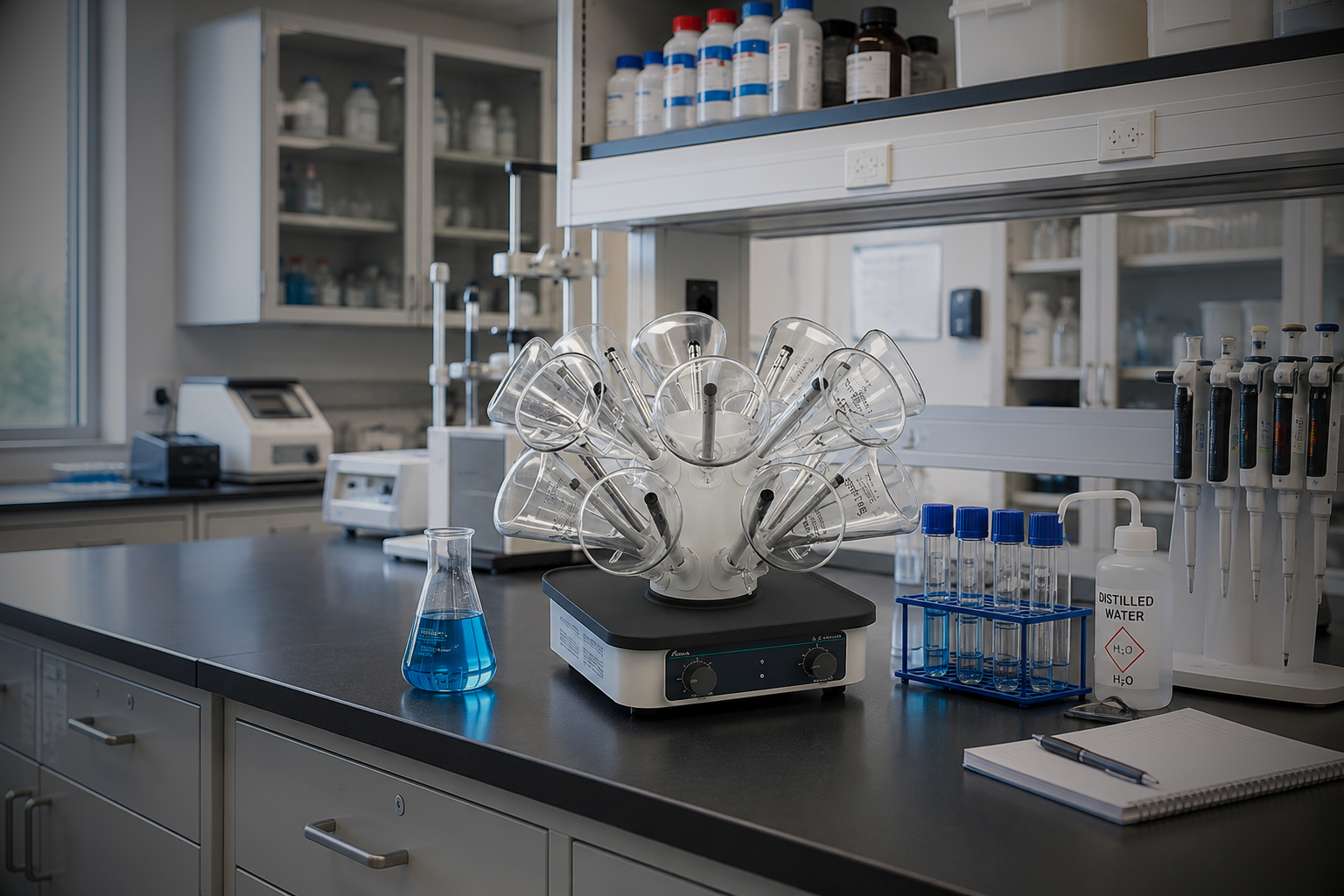
A Glassware Dryer works by directing heated airflow through stainless steel drying tubes positioned inside the vessel. As a result, warm air reaches the interior surfaces directly, helping moisture evaporate more quickly than conventional drying racks.
Furthermore, modern units can accommodate multiple vessels simultaneously. This allows laboratory staff to process larger volumes of glassware without increasing bench space requirements.
Choosing the Right Glassware Dryer Capacity
Not all laboratories have the same drying requirements. Consequently, selecting the correct capacity is often the most important purchasing decision.
When evaluating a Glassware Dryer, consider:
- The number of vessels requiring drying per batch
- The size of the vessels being used
- Available bench space
- Daily laboratory throughput
- Whether heated airflow is required
Many laboratories dry a combination of Erlenmeyer flasks, round-bottom flasks, beakers, measuring cylinders, and bottles. Therefore, understanding vessel size and quantity helps determine the most suitable configuration.
For laboratories with higher throughput, models with 16 or 24 drying positions often provide better long-term value than smaller units.
Important Features to Consider
Although drying capacity is important, several other features can influence performance.
Look for systems that offer:
- Adjustable airflow settings
- Variable heating levels
- Built-in timers
- Over-temperature protection
- Stainless steel air ducts
- Compact benchtop design
Additionally, airflow speeds of up to 2.5 m/s and temperatures reaching 85°C can help laboratories dry vessels efficiently while maintaining safe operation.
Safety features are equally important. For example, automatic shut-off protection helps prevent overheating and supports routine laboratory use.
Supporting Laboratory Efficiency
A Glassware Dryer can be useful in universities, research institutes, pharmaceutical facilities, food laboratories, environmental testing centers, and industrial quality control departments.
If you would like to learn more about drying systems and related accessories, visit the Vertex Analytical Insights section and explore our Glassware Dryer product page for detailed specifications and model comparisons.
You can also follow Vertex Analytical on LinkedIn or subscribe to our YouTube channel for practical laboratory tips, application discussions, and equipment updates.
Conclusion
For laboratories looking to improve workflow efficiency without adding significant cost, a Glassware Dryer provides a practical and affordable solution. By reducing drying times, supporting multiple vessel types, and simplifying daily operations, a Glassware Dryer can help laboratories across South Africa maintain consistent productivity. Contact Vertex Analytical, your trusted laboratory supplier and distributor of affordable laboratory equipment, to learn more about available Glassware Dryer models or request a quotation.