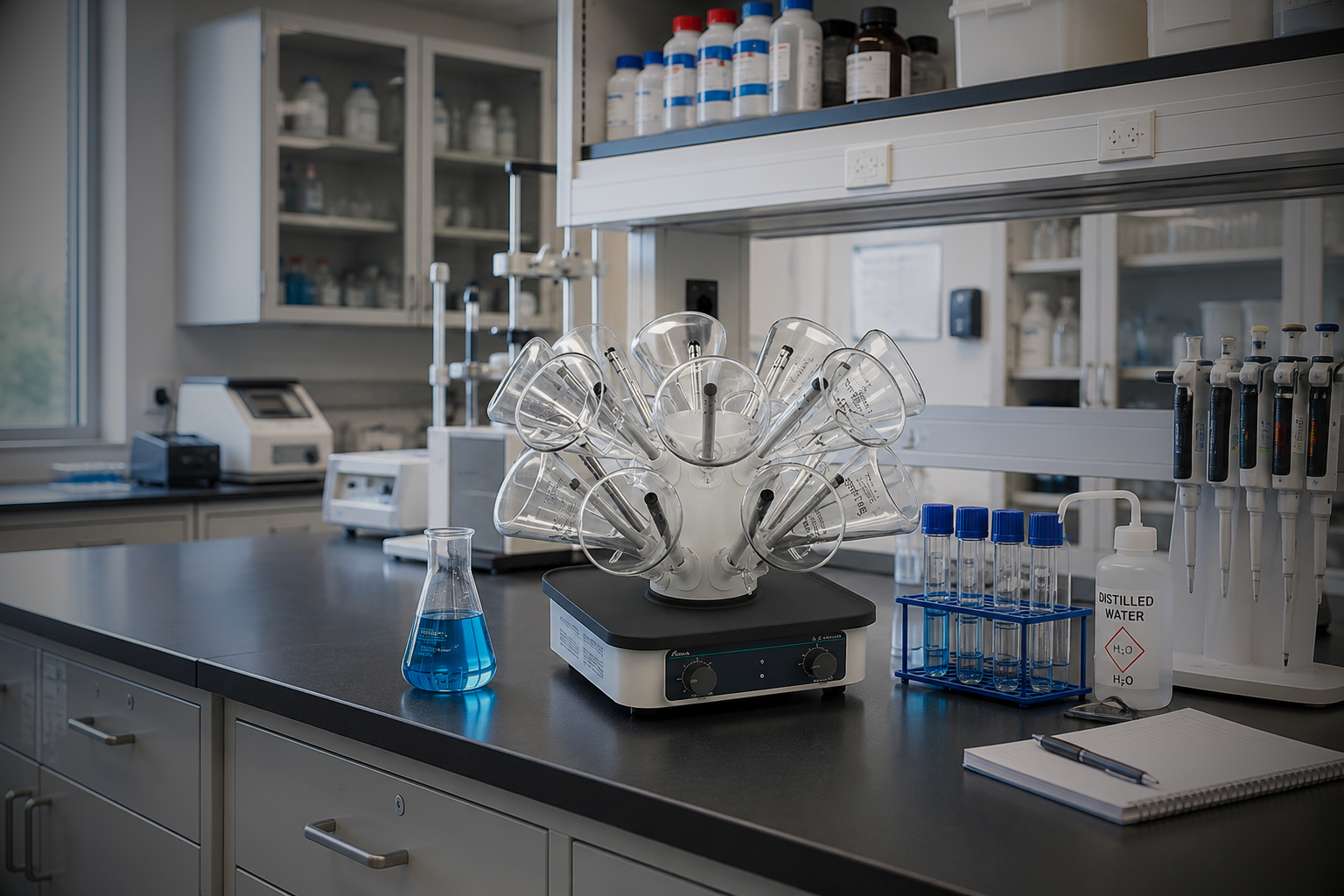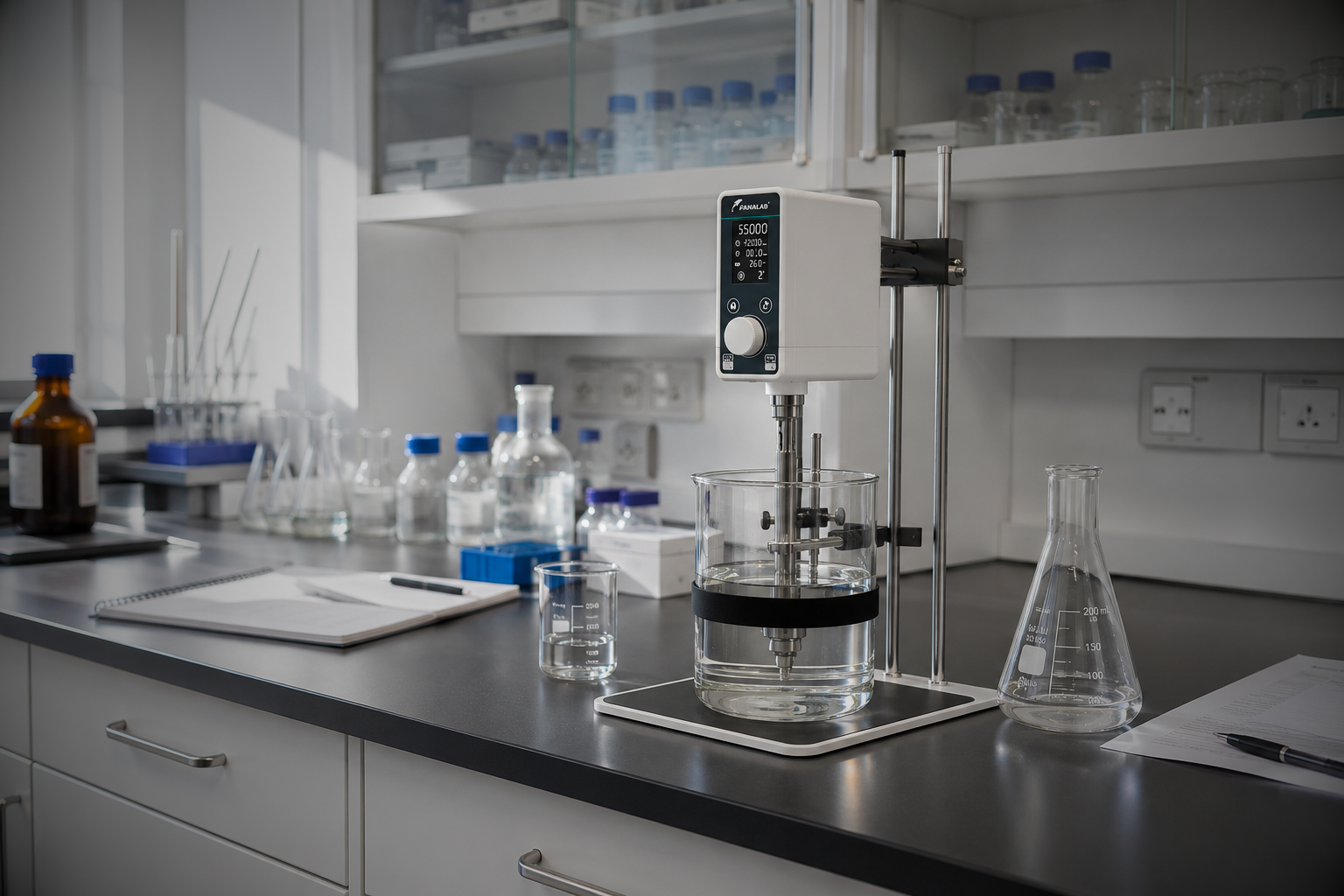
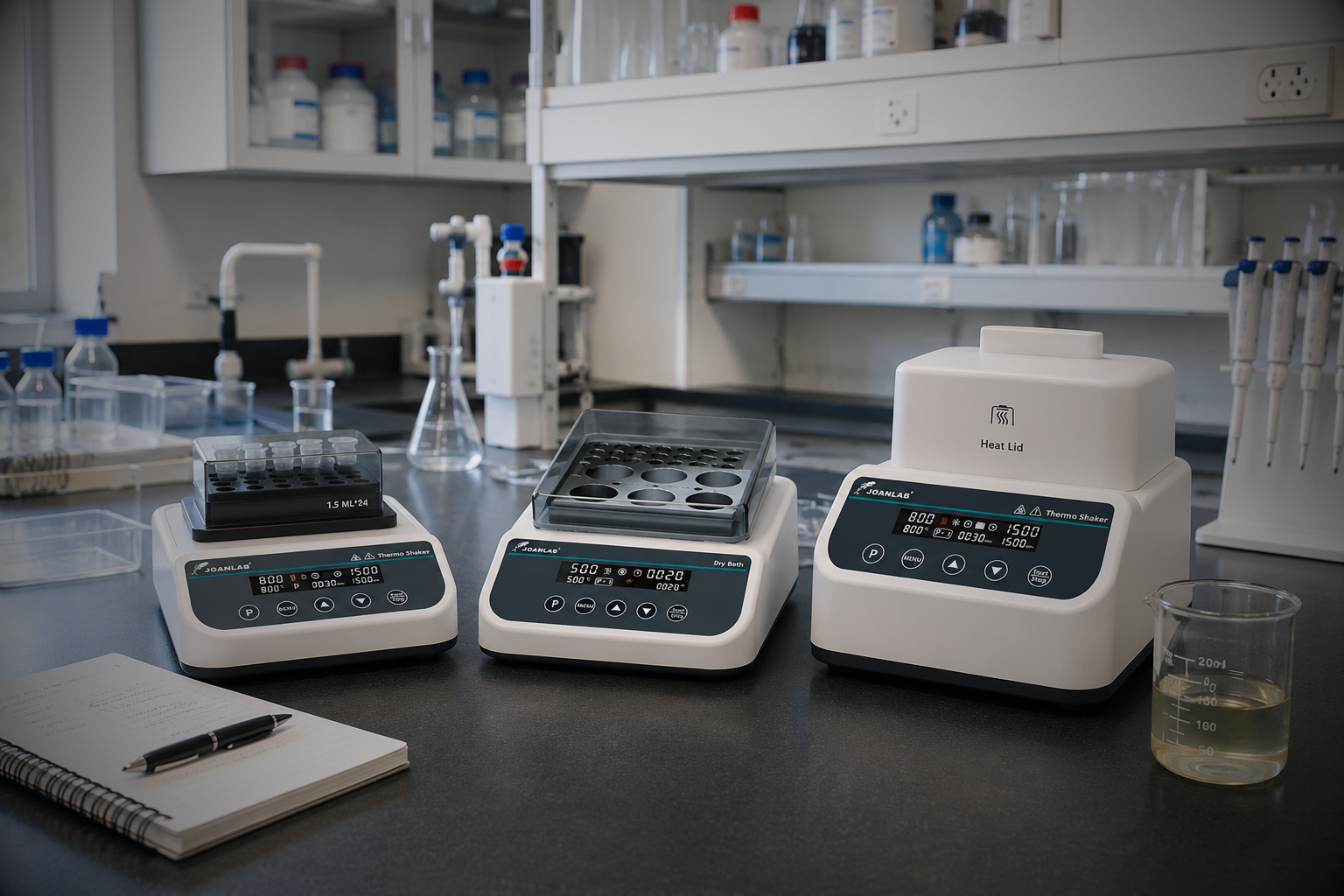
Dry Baths have become essential tools in molecular biology, clinical laboratories, microbiology facilities, and industrial testing environments. Unlike traditional water baths, Dry Baths provide controlled heating without the inconvenience of water handling, making them a practical solution for modern laboratory workflows in South Africa. Based on the attached cheat sheet, dry baths are commonly used for DNA/RNA preparation, enzyme reactions, PCR sample preparation, sample incubation, and protein denaturation workflows. Depending on the application, laboratories may choose a Mini Dry Bath for rapid heating of small sample batches, a Dry Bath Incubator for precise temperature-controlled incubation, or a Dry Bath Shaking Incubator that combines heating and mixing within a single compact system.
At Vertex Analytical, scientists and laboratory technicians often select Dry Baths because they offer cleaner operation, faster setup, and reduced contamination risk compared to conventional water baths. In addition, many laboratories prefer compact benchtop systems that fit efficiently into limited workspaces while delivering reliable and consistent temperature control.
Laboratories looking for compatible systems can also explore related Mini Dry Bath, Dry Bath Incubator, and Dry Bath Shaking Incubator product pages alongside other laboratory equipment solutions available from Vertex Analytical, a laboratory supplier and distributor serving South Africa. To see these systems in operation and learn more about their features and applications, explore our laboratory equipment videos and educational content on our YouTube and LinkedIn channels.
Why Dry Baths Improve Laboratory Workflows
One of the main advantages of Dry Baths is their interchangeable heating block design. Laboratories can select heating blocks specifically suited for PCR tubes, microtubes, centrifuge tubes, or microplates. This flexibility allows laboratories to support multiple applications using a single system.
Furthermore, many Dry Baths include digital temperature control, timer functions, and over-temperature protection. These features improve consistency and help laboratories maintain repeatable results during sensitive workflows. Temperature uniformity is particularly important in molecular biology and clinical testing environments where sample consistency directly affects reliability.
Some laboratories also choose Dry Baths with shaking functionality. These systems combine heating and mixing, which improves reaction efficiency and sample preparation performance. For applications involving sensitive samples, heated lids help minimise condensation while improving temperature uniformity.
Important Considerations When Selecting Dry Baths
Selecting the correct Dry Baths requires more than simply choosing a temperature range. Laboratories should first evaluate tube compatibility, sample throughput, and future application requirements. Common mistakes include selecting incorrect block sizes or insufficient sample capacity.
For example, research laboratories handling multiple tube formats may benefit from multi-block systems. Meanwhile, laboratories running routine workflows may prefer affordable single-block units for daily heating applications.
Temperature requirements also play an important role. Most Dry Baths operate from ambient +5°C up to approximately 100°C–150°C, depending on the model and application.
Dry Baths from Vertex Analytical
Vertex Analytical supplies affordable and economic Dry Baths for laboratories across South Africa. Whether your application involves PCR preparation, microbiology workflows, clinical sample warming, or industrial testing, our laboratory equipment range supports a wide variety of heating applications.
You can also follow Vertex Analytical on YouTube and LinkedIn for additional laboratory equipment insights, product updates, and application-focused content.
For laboratories seeking reliable and practical Dry Baths, Vertex Analytical can assist with selecting suitable configurations, heating blocks, and accessories for your workflow requirements.